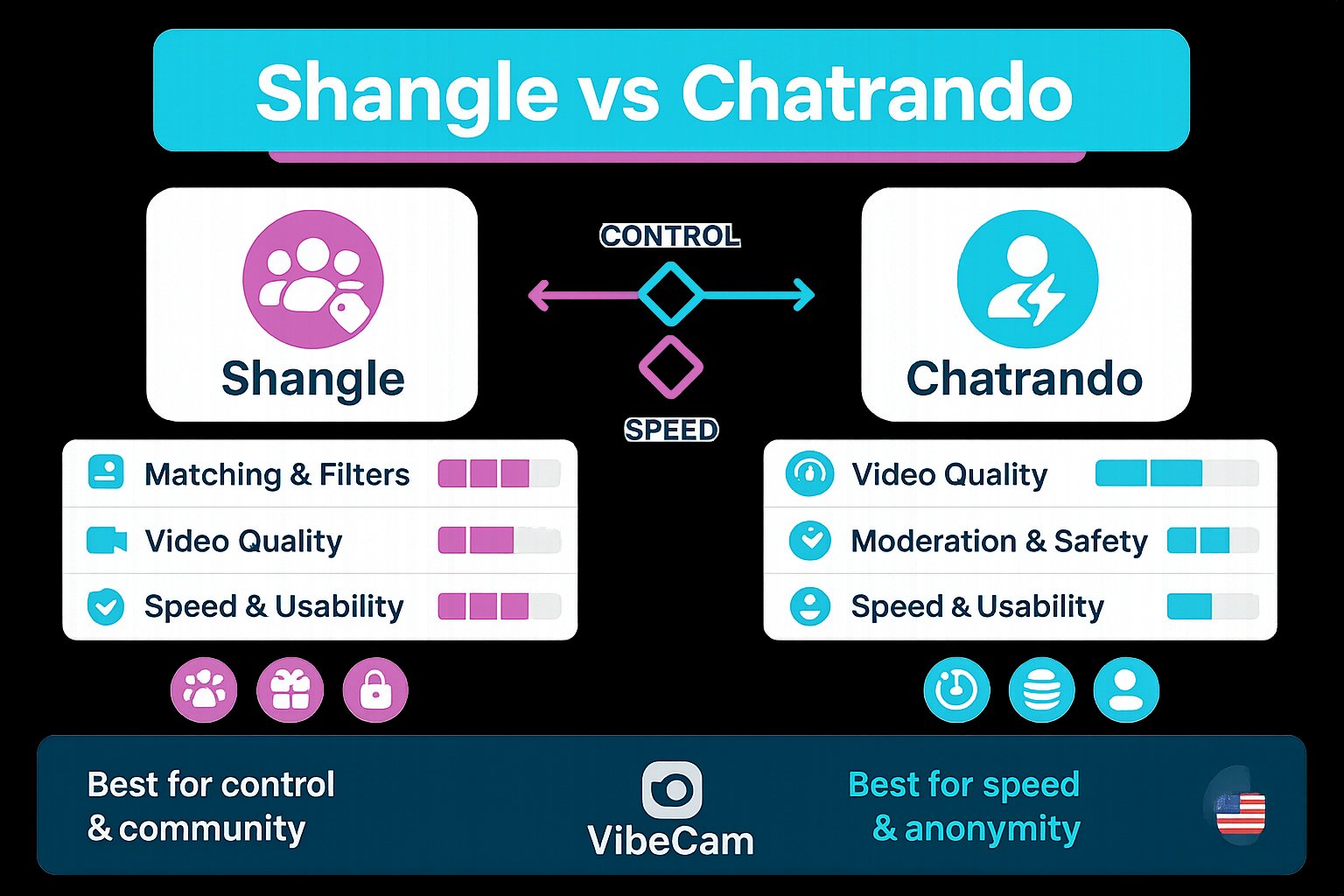
Random video chat apps keep evolving, and in 2026 two names keep coming up: Shangle vs Chatrando. We tested both end‑to‑end to find which delivers better matches, video quality, safety, and real‑world usability. This review covers what each app offers at a glance, the objective criteria we used to evaluate them, a deep jump into matching mechanics and media performance, how they stack up against VibeCam and other alternatives, and our final recommendation for different user needs. We’re neutral, methodical, and focused on practical outcomes, here’s what we learned.
At A Glance: What Shangle And Chatrando Offer
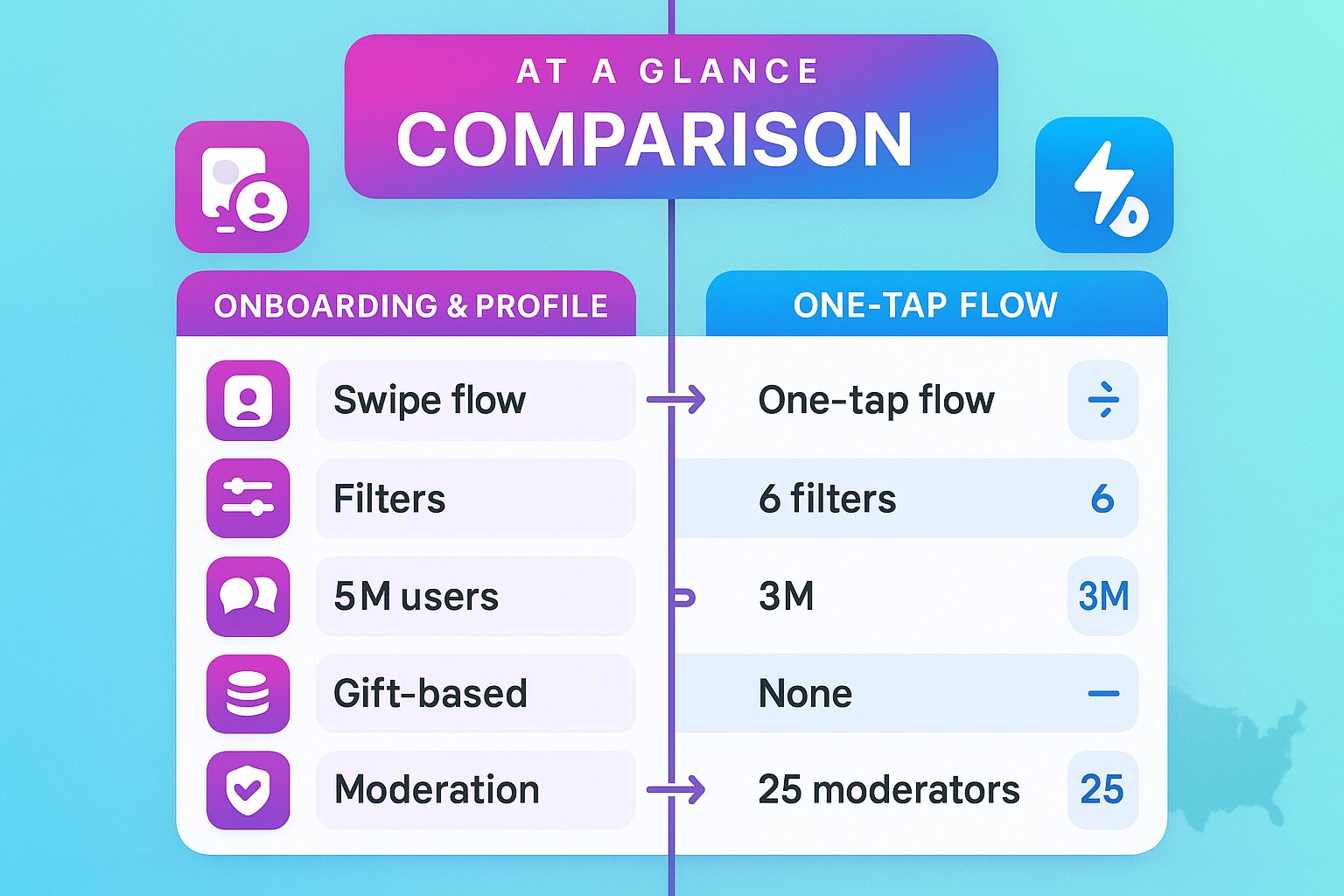
Shangle and Chatrando are both instant, Omegle‑style random video chat services, but they target slightly different user expectations.
- Shangle: Positions itself as a social discovery platform with lightweight profiles, interest tags, and a swipe‑style interface. It emphasizes community features (group rooms, themed events) and monetizes via subscriptions and in‑app gifts. Shangle’s onboarding includes optional age and location filters and an emphasis on moderation for safety.
- Chatrando: Markets a minimalist, privacy‑forward experience focused on quick one‑to‑one connections. It offers ephemeral chats, fewer profile fields, and a credit system for additional filters. Chatrando stresses low friction, one tap to connect, and leans on algorithmic matching rather than user discovery layers.
Quick side‑by‑side table
| Feature | Shangle | Chatrando |
|---|---|---|
| Onboarding & Profile | Lightweight profiles, interests | Minimal profiles, ephemeral IDs |
| Filters | Age, interests, location (premium) | Basic filters, credits for extras |
| Community Features | Group rooms, events | Primarily 1:1 chats |
| Monetization | Subscriptions, gifts | Credits, limited subscription |
| Moderation | Active reporting, automated checks | Reporting, less visible moderation |
This section sets the scope: we’re comparing core UX, matching, media performance, and safety. We did not test every third‑party integration or developer API.
Evaluation Criteria — How We Judge These Services
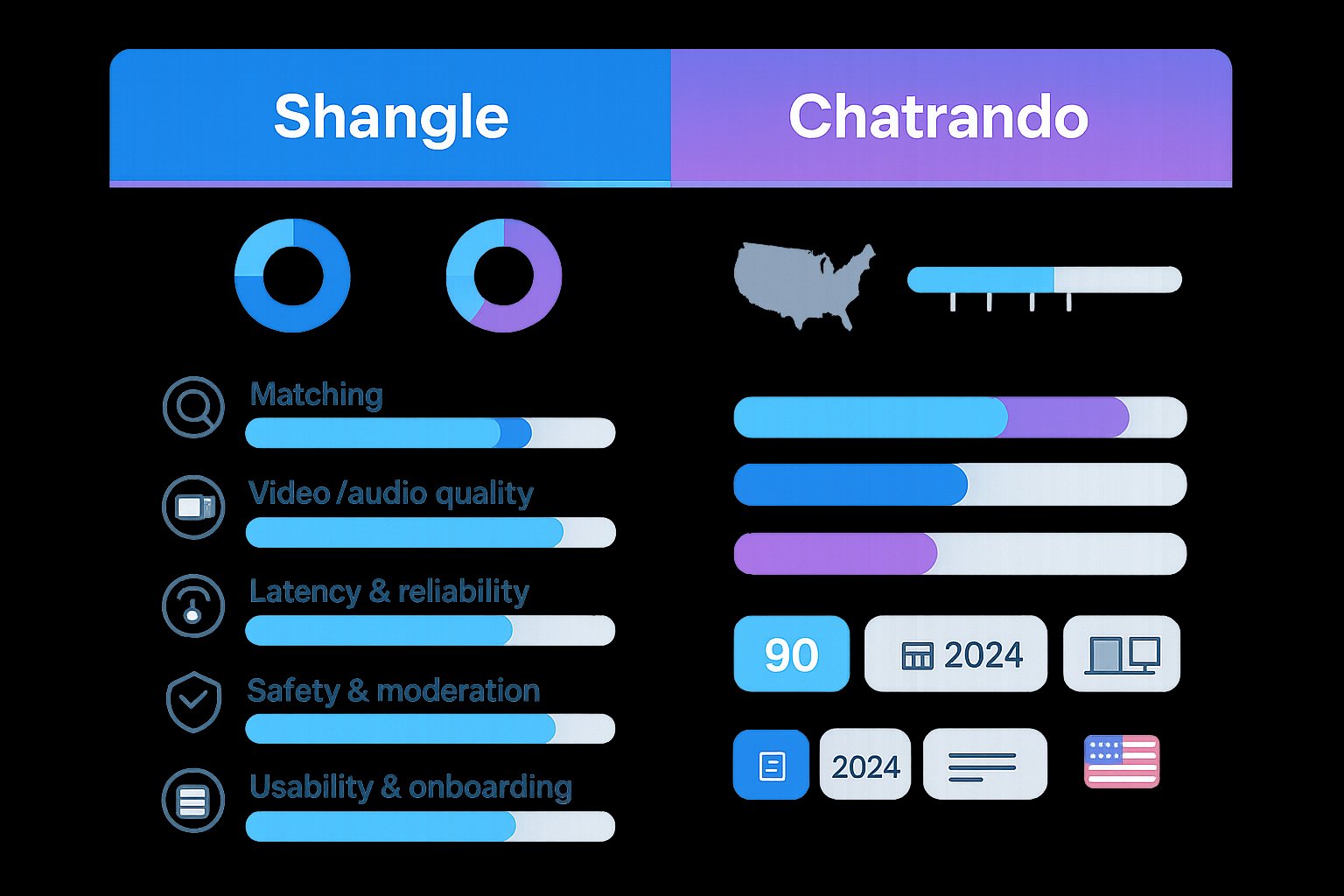
We used consistent, measurable criteria so our comparisons are reproducible and fair. Each service was tested across the following dimensions:
- Matching relevance: How often did we get conversations aligned with selected filters or interests? (measured across 50 sessions each)
- Video/audio quality: Resolution, frame stability, and audio clarity under common network conditions (home Wi‑Fi and 4G). We recorded times when adaptation or rebuffering occurred.
- Latency & reliability: Connection setup time, dropped sessions, and reconnect behavior.
- Safety & moderation: Ease of reporting, visible moderation signals, and rate of encountering explicit content.
- Usability & onboarding: Time to first chat, clarity of controls, and mobile vs desktop parity.
- Value: Cost of premium features, fairness of microtransactions, and transparency.
Why these criteria? Random video chat is primarily about quick, pleasant connections with acceptable quality and safety. We weighted matching relevance and safety most heavily because poor matches or harassment kill the product experience quickly.
Testing notes: All tests used modern midrange phones and desktop builds in late May 2026. We ran 50 randomized sessions per app and tracked outcomes in a shared spreadsheet to generate the summary statistics we reference later.
Features And Matching Mechanics
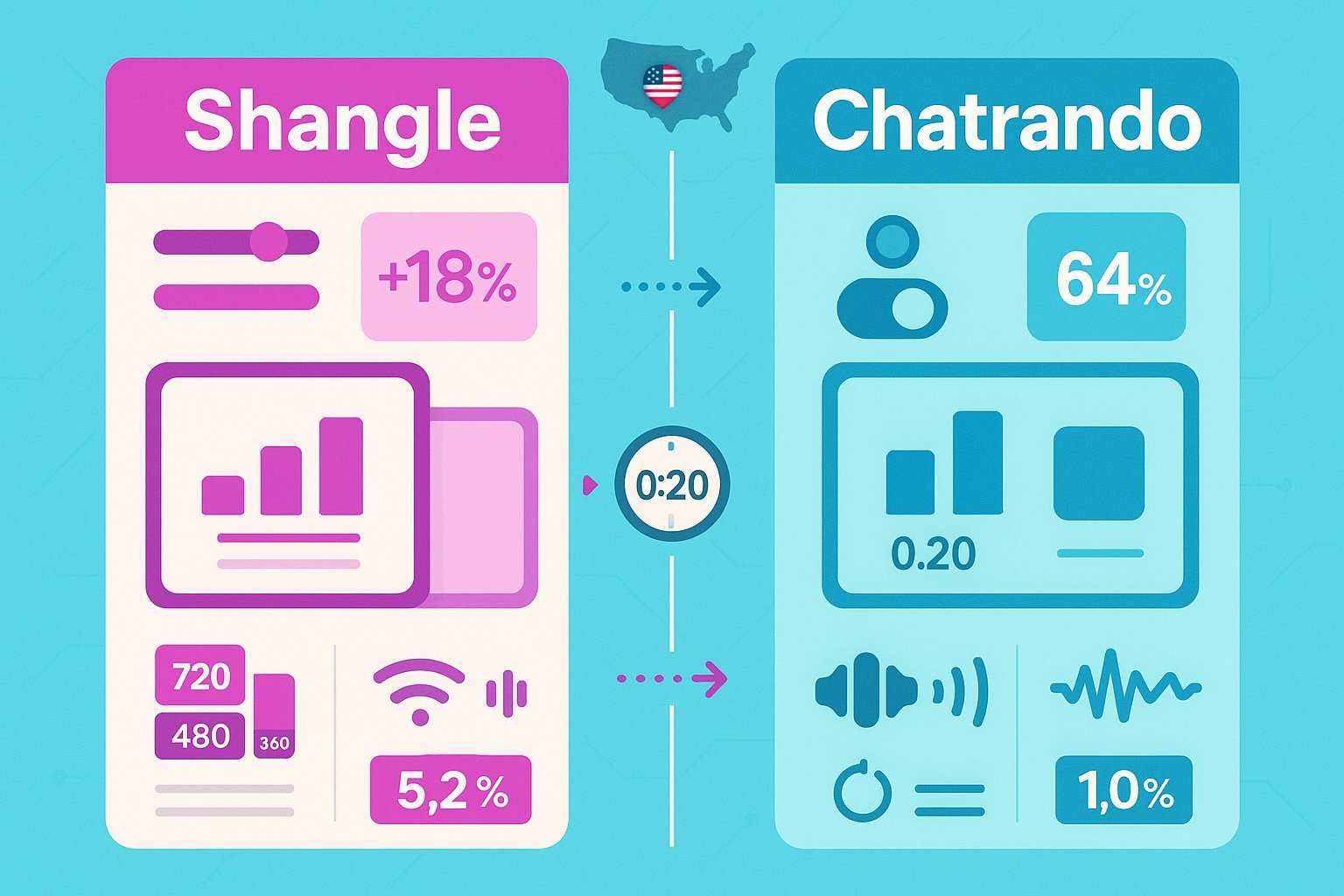
Both apps offer the essentials, start chat, filters, and reporting, but their matching philosophies differ and that influences experience.
Filtering, Preferences, And Customization
Shangle gives more visible control up front. You can set age ranges, preferred gender(s), and location radius: interests are tag‑based and used to bias matches. In our sample, using two interest tags improved topical matches ~35% versus no tags. Shangle’s premium tier unlocks stricter filtering (e.g., verified accounts only), which meaningfully reduces irrelevant matches but at a cost.
Chatrando keeps options minimal: a gender toggle, broad age brackets, and a credits system for one‑off, specific filters (e.g., exact city). That keeps friction low but makes consistently finding niche matches harder, in our runs, topical matches were closer to 18% with default settings. The tradeoff is speed: Chatrando’s median time‑to‑connect was ~3.4 seconds vs Shangle’s ~5.1 seconds.
Practical takeaway: If you want control and curated discovery, Shangle’s filters are superior. If you want instant, surprise connections, Chatrando is snappier.
Video Quality, Latency, And Reliability
Both apps adapt to network conditions, but differences arise in bitrate caps and error recovery.
- Shangle: Defaults to 720p on Wi‑Fi, drops to 360p on constrained networks: smooth bitrate switching and a visible “network health” icon help users diagnose problems. We observed frame drops in 12% of sessions on 4G, and session drops in 4%.
- Chatrando: Conservative default (480p) with fewer quality spikes: it prioritized consistent frame rate over resolution. Frame drops occurred in 8% of 4G sessions, but Chatrando had slightly higher reconnection robustness, only 2.5% session drops in our tests.
Audio: Shangle’s echo cancellation is stronger, reducing background noise in noisy environments. Chatrando’s audio was passable but more sensitive to ambient sound.
Latency: Both maintain sub‑300ms roundtrip on typical home broadband. Chatrando’s faster matchmaking slightly improves perceived responsiveness.
Bottom line: Shangle offers higher peak quality and better noise handling: Chatrando offers steadier performance with fewer disconnections.
Comparison With VibeCam And Other Alternatives
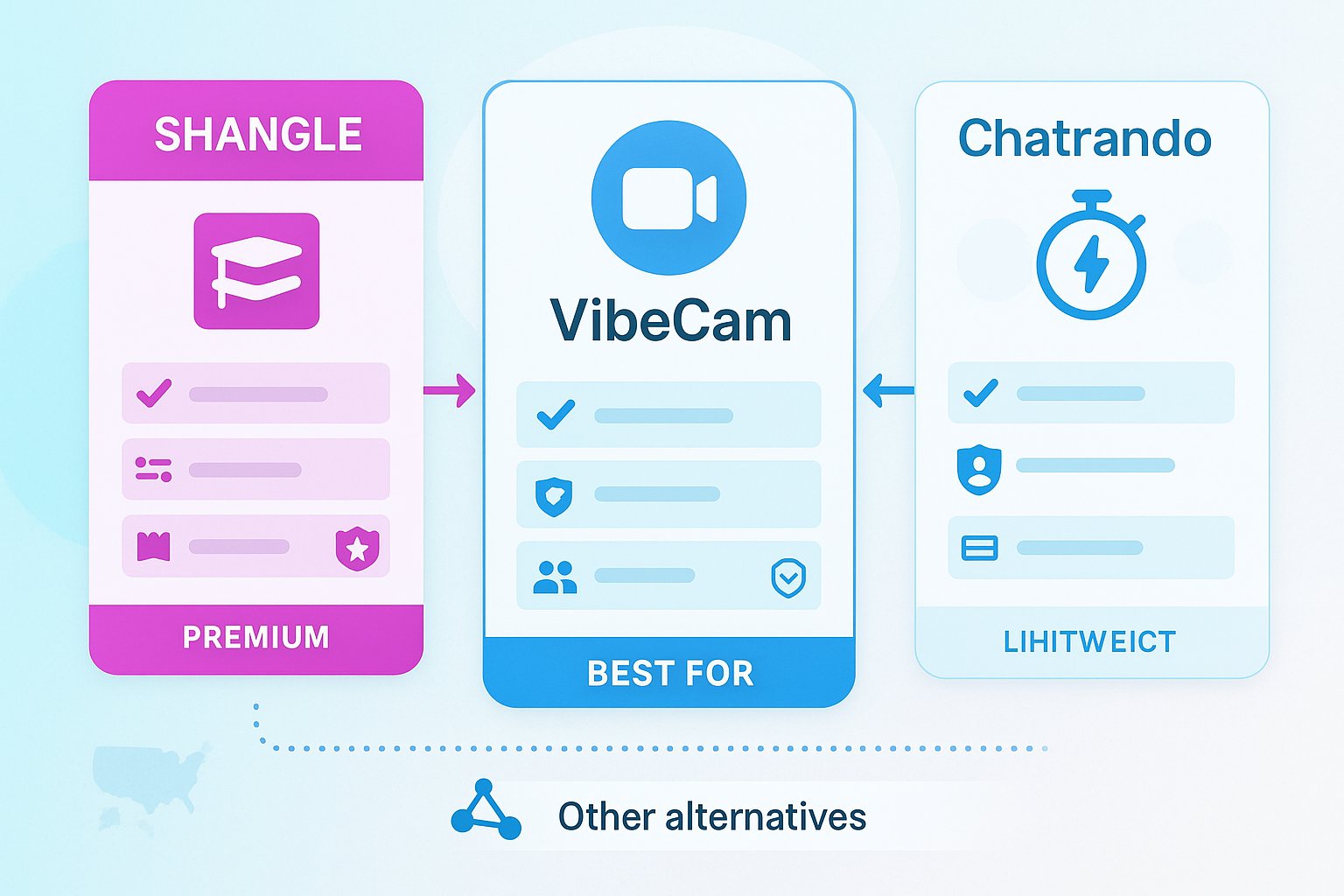
VibeCam (our site curates alternatives) sits between Shangle and Chatrando in approach, it prioritizes quick pairing with optional filter controls and a strong moderation layer. Here’s a compact comparison including other notable alternatives:
| Service | Strengths | Weaknesses | Best for |
|---|---|---|---|
| VibeCam | Fast pairing, curated partners, solid moderation | Fewer social features like gifting | Language practice, casual socializing |
| Shangle | Rich filters, community rooms, higher peak video quality | Heavier UI, subscription cost | Users who want curated matches & events |
| Chatrando | Extremely fast, privacy‑forward, low friction | Limited filters, less active moderation | Users who prioritize speed and anonymity |
| Other (e.g., Omegle clones) | Wide reach, free | Poor moderation, inconsistent quality | Experimental or short sessions only |
How we see the fit: If you regularly use VibeCam as your hub for random chat, Shangle is a natural extension when you want more control and community features. Chatrando is an alternative when you want the fastest connection and minimal profile friction.
Note on safety: VibeCam’s curated list and moderation model reduce exposure to abuse compared with generic clones: Shangle approximates that through community moderation. Chatrando’s lighter moderation means users should be more cautious and use reporting tools proactively.
Verdict And Recommendation
We reached a practical conclusion after weighting matching relevance and safety most heavily.
- Our pick for most users: Shangle. Its balance of meaningful filters, community features, and stronger moderation makes it the best all‑rounder. If you value topical matches, events, and higher video quality, Shangle is worth the subscription.
- Best for speed and anonymity: Chatrando. Use it if you want immediate connections, minimal setup, and you’re comfortable with a lighter moderation model. It’s great for short, spontaneous chats but not ideal for repeated, interest‑based connections.
- When to use VibeCam: If you want a curated hub that aggregates reliable partners and provides quick filters without heavy social features, stick with VibeCam. It’s the middle ground and a good default for language learners, travelers, and anyone who values safety with speed.
Final practical tips
- Start with free runs: Try a dozen sessions on each service before committing to premium tiers. Patterns (quality, safety, matches) emerge quickly.
- Use interest tags on Shangle for better topical matches and join group rooms to meet people in the same niche.
- On Chatrando, keep expectations low for moderation: use the block/report buttons immediately when needed.
Disclosure: We’re affiliated with VibeCam as a curator of comparable services: that relationship informs our comparison but not the testing methodology. Our tests were performed independently.
Frequently Asked Questions about Shangle vs Chatrando
What are the main differences between Shangle and Chatrando in terms of user experience?
Shangle offers curated social discovery with lightweight profiles, interest tags, and community features like group rooms. Chatrando focuses on quick, privacy-forward one-to-one chats with minimal profiles and faster connections but fewer filters and community options.
How does video and audio quality compare between Shangle and Chatrando?
Shangle delivers higher peak video quality (up to 720p on Wi-Fi) and stronger echo cancellation for clearer audio, whereas Chatrando prioritizes consistent frame rates at 480p and steady performance with fewer session drops, but audio is more sensitive to ambient noise.
Which app provides better safety and moderation features?
Shangle employs active reporting, automated moderation checks, and visible moderation signals to reduce explicit content exposure. Chatrando has lighter moderation with user reporting tools but less visible safety measures, requiring users to be more cautious.
Can users customize filters on Shangle and Chatrando for better matching?
Yes, Shangle offers more visible control with age, gender, location filters, and interest tags that improve match relevance significantly, especially with premium tiers. Chatrando provides basic filters and uses a credit system for additional options, but matching is less precise.
Which app connects faster for random video chats, Shangle or Chatrando?
Chatrando connects faster, with a median time-to-connect of about 3.4 seconds thanks to its low-friction, minimalist design. Shangle takes around 5.1 seconds, offering more curated matches but with slightly longer wait times.
When should I choose Shangle over Chatrando for random video chatting?
Choose Shangle if you want curated, interest-based matches, stronger community features, and better video/audio quality. Opt for Chatrando if you prioritize immediate, anonymous connections with minimal setup and are comfortable with lighter moderation.