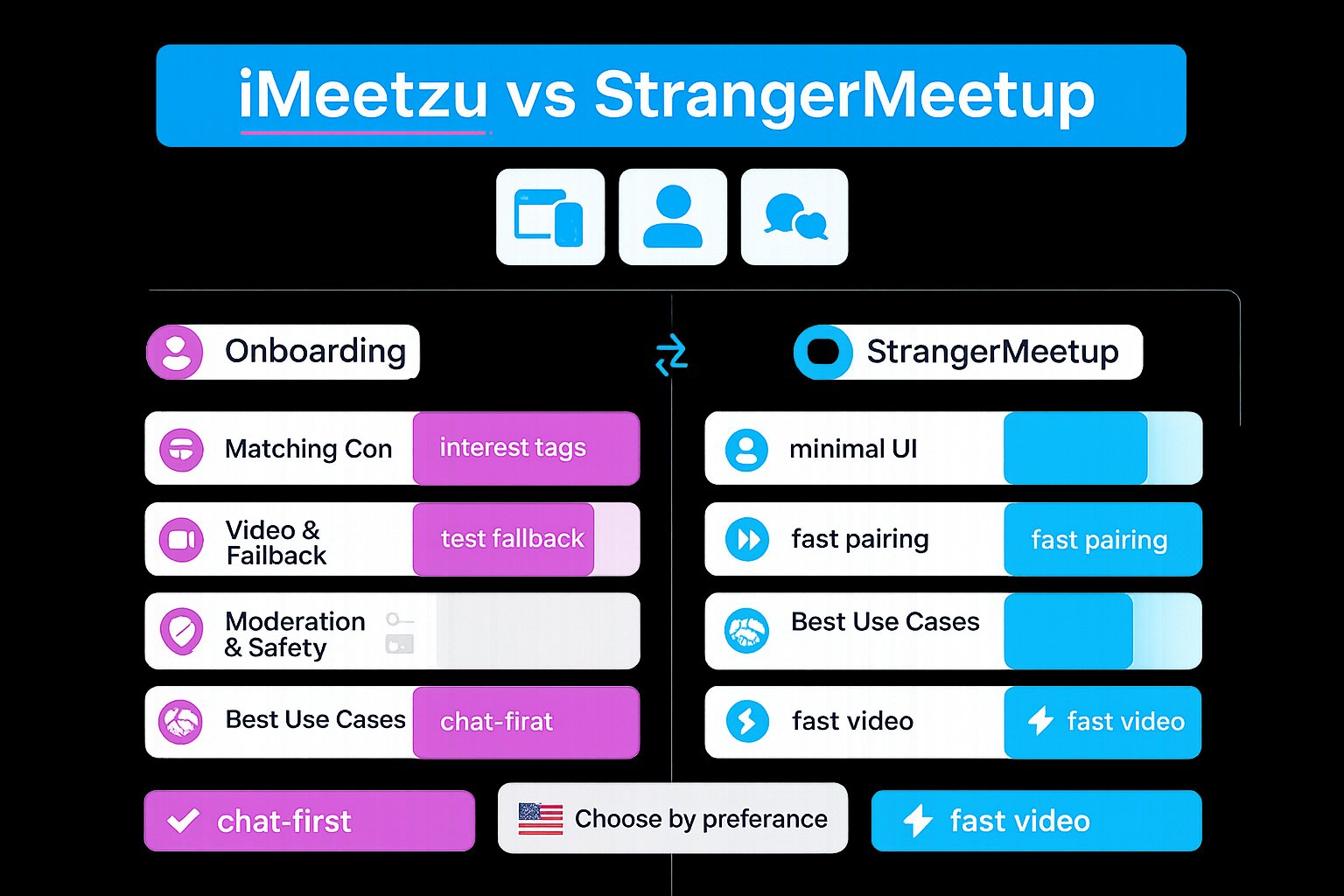
We tested iMeetzu and StrangerMeetup side‑by‑side so you don’t have to. In this review we’ll explain how each platform works, compare core features like video quality and moderation, run them through the same evaluation criteria, and give a clear recommendation depending on what you want from a random video chat. Throughout we’ll reference real use cases, language practice, casual socializing, and privacy‑minded users, and highlight where each service shines or falls short.
At A Glance: Quick Facts And Specs
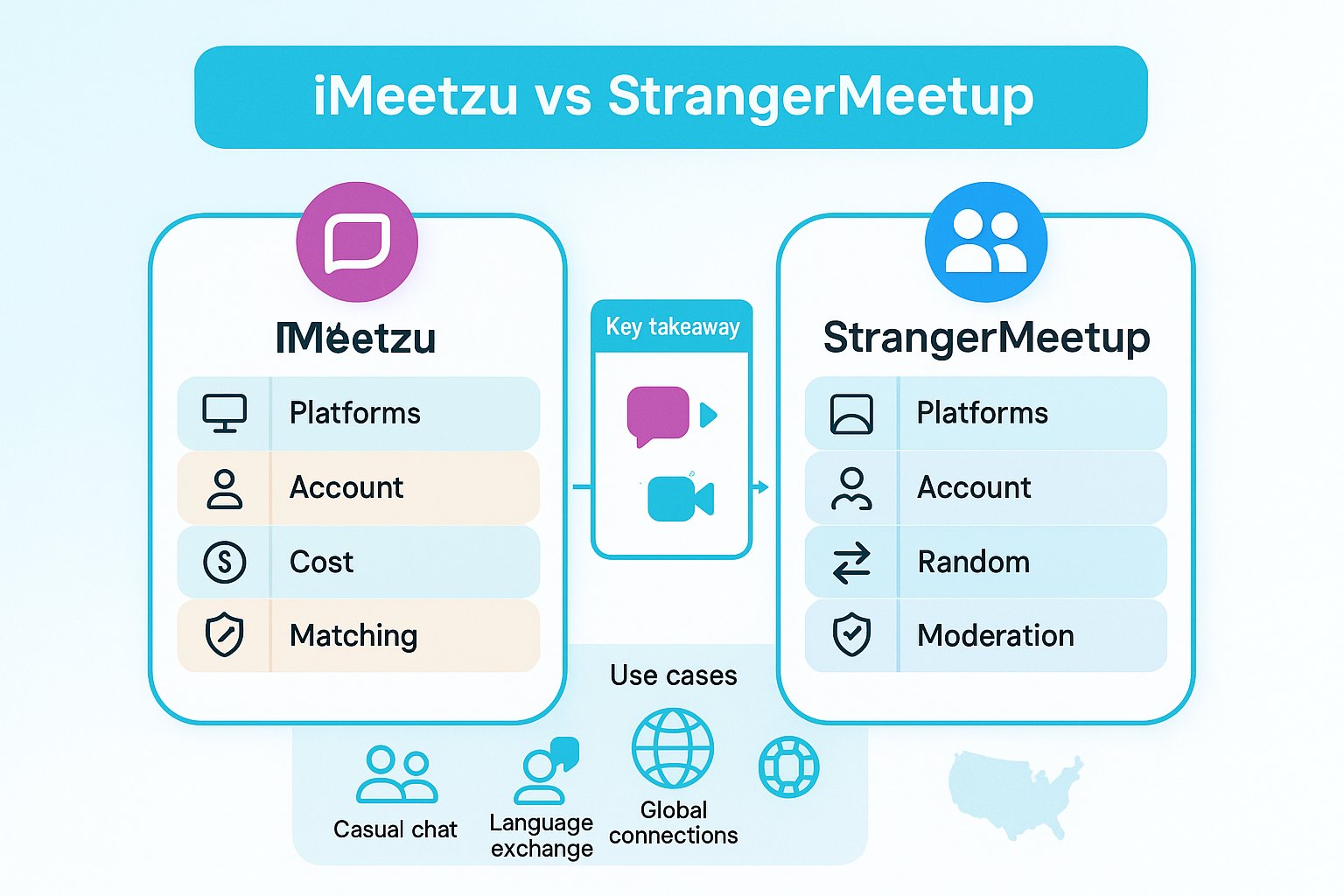
Here are the quick facts for iMeetzu and StrangerMeetup so you can scan the essentials.
- Platforms: Browser (both): mobile-friendly web UI (both).
- Account: Optional for iMeetzu: optional/anonymous for StrangerMeetup depending on mode.
- Cost: Free with optional paid features or donations on some mirrors.
- Matching: Random one‑to‑one video with optional filters.
- Moderation: Community reporting + automated filters (varies by site).
- Use cases: Casual chat, language exchange, meeting people globally.
Key takeaway: both services are built around instant, anonymous connections with low friction. We found iMeetzu emphasizes chat and quick text → video transitions, while StrangerMeetup focuses on straightforward video pairing with minimal UI clutter. For a hands‑on demo of similar platforms and aggregated alternatives, our site curates reliable options on VibeCam.
How Each Service Works (Onboarding, Matching, Moderation)
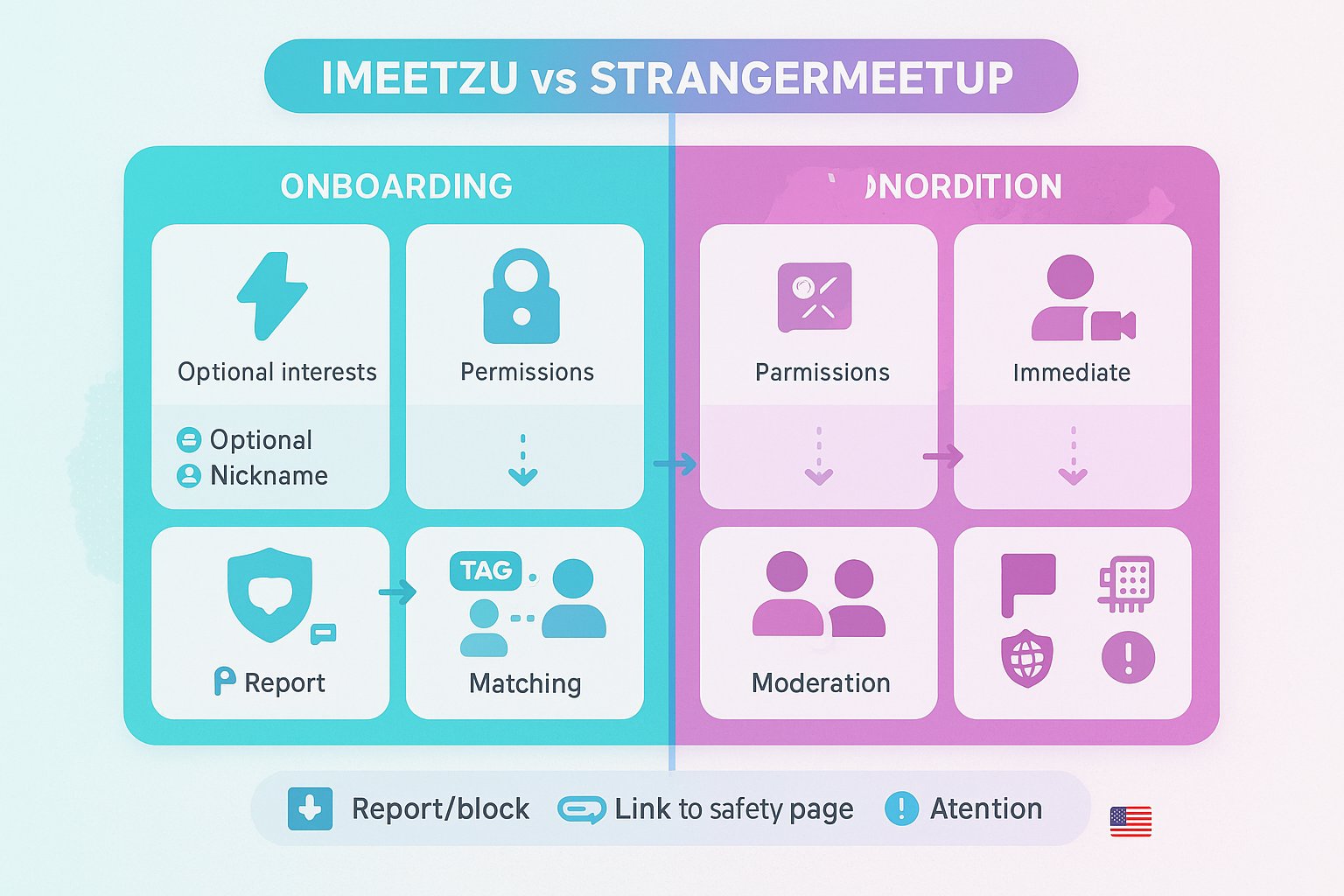
Onboarding
- iMeetzu: You can join immediately from the homepage. No mandatory sign‑up: optional nickname and interests improve matching. The interface guides you from text to webcam quickly.
- StrangerMeetup: Start by allowing camera/mic access. There’s usually no registration. Some forks present simple toggles for gender or country filters.
Matching
- Both platforms use random pairing. iMeetzu offers lightweight interest tags and chat first options: StrangerMeetup tends to prioritize immediate video pairing. Neither uses deep profile feeds, the goal is instant connection.
Moderation
- iMeetzu: Moderation is mixed, community reporting is primary, with some automated checks. We saw occasional delays in removing offenders during heavier traffic.
- StrangerMeetup: Many implementations rely on reporting and IP blocks: some instances add CAPTCHA and simple AI filters for nudity detection.
Practical note: Because moderation policies differ between mirrors/instances, we recommend checking the site’s safety page and using the report/block button immediately if a session becomes inappropriate.
Key Features And Technical Details (Video Quality, Filters, Privacy)
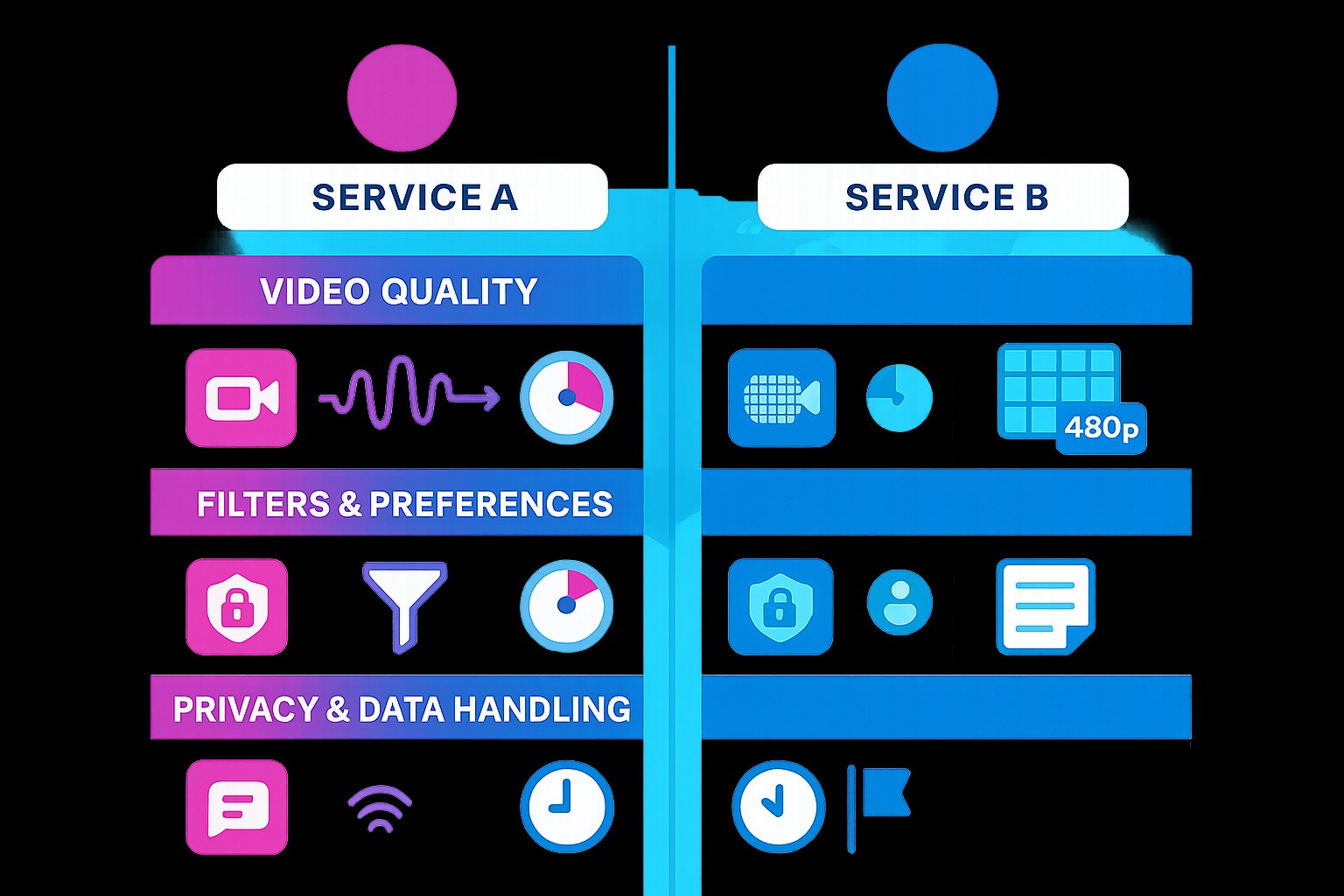
Video Quality
- iMeetzu: Video is generally stable on 10–30 Mbps connections: it gracefully falls back to audio when bandwidth fluctuates. We experienced artifacting at peak times but acceptable latency for conversation.
- StrangerMeetup: Video quality varies more across different instances but can be slightly better on less loaded servers. Resolution typically targets 480p: 720p is rare.
Filters and Preferences
- Age/location filters: Both offer basic age or country filters in some versions, but accuracy isn’t guaranteed since profiles are lightweight.
- Interest tags: iMeetzu supports interest selection which slightly improves matching relevance.
Privacy and Data Handling
- Anonymity: Both services allow anonymous use: no verified identity required.
- Data retention: Policies vary, some StrangerMeetup mirrors retain minimal logs: iMeetzu’s policy is inconsistent across deployments. Treat both as semi‑ephemeral: don’t share sensitive info.
Extra features
- Text fallback: iMeetzu provides a smooth switch to text chat if video fails. StrangerMeetup is more video‑centric.
- Reporting UI: Present on both: response times depend on moderation staffing.
Summary: If stable video with a text fallback matters, iMeetzu has a small edge. If you prioritize the simplest video path, StrangerMeetup may feel snappier.
Evaluation Criteria Used In This Review
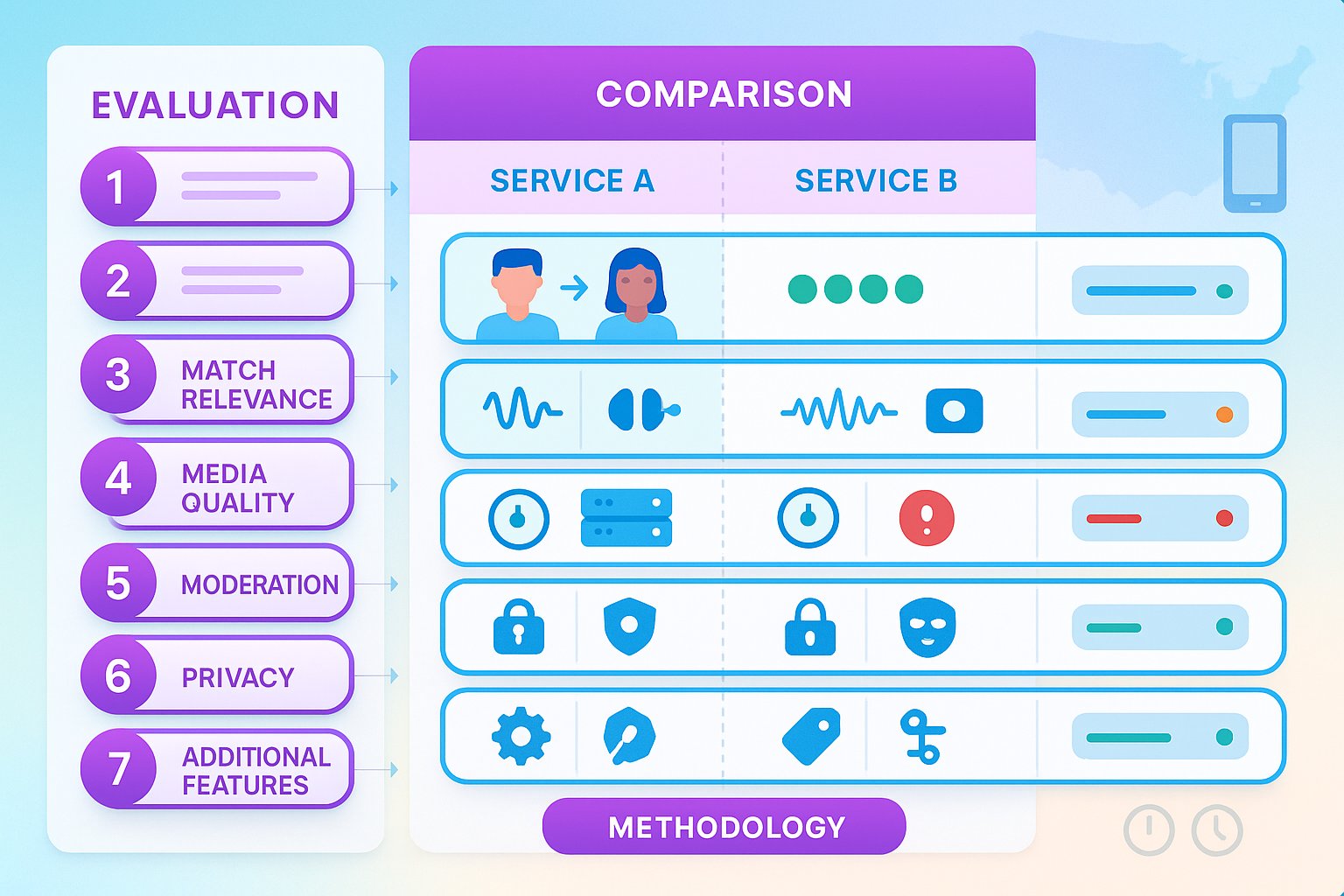
We applied a consistent set of criteria to keep the comparison objective.
- Onboarding friction, how quickly can a new user start chatting?
- Match relevance, do filters and tags actually improve pairing?
- Video/audio quality, measured subjectively across varying bandwidths.
- Moderation & safety, availability and effectiveness of reporting, automated filters, and response times.
- Privacy & anonymity, data handling, account requirements, and exposure risk.
- Additional features, text fallback, interest tags, language options.
- Reliability & uptime, stability during peak hours.
Methodology: We conducted repeated five‑minute sessions at three different times of day for each service, tested on desktop and mobile, and noted connection quality, moderation actions, and user behavior. We also reviewed publicly available privacy statements and community reports to triangulate moderation claims.
Side‑By‑Side Comparative Analysis
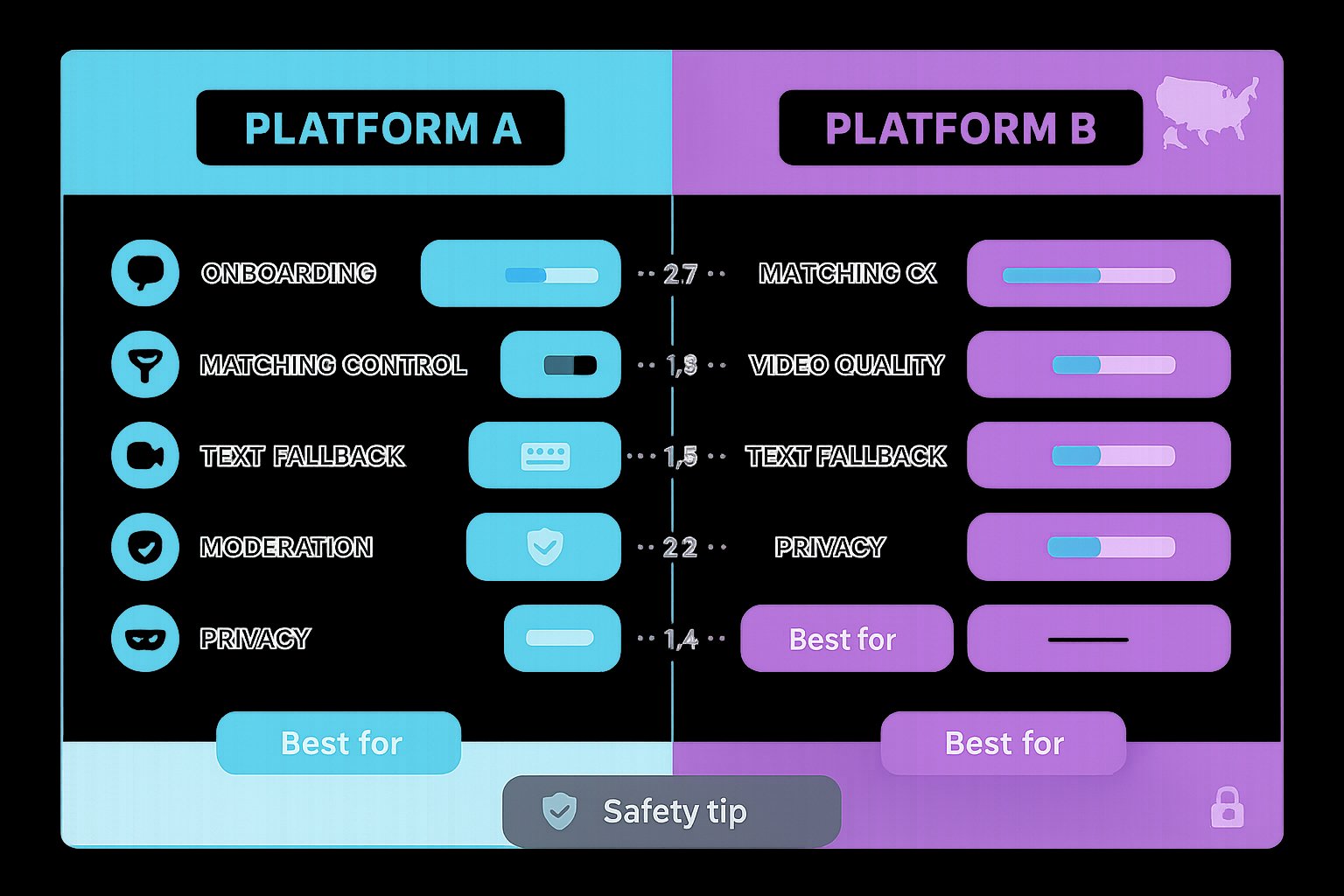
Below is a concise comparison to see differences at a glance.
| Category | iMeetzu | StrangerMeetup |
|---|---|---|
| Onboarding | Very low friction: optional nickname & interests | Extremely low friction: camera prompt only |
| Matching control | Interest tags, basic filters | Basic filters on some mirrors: less control |
| Video quality | Stable with graceful fallback | Variable: can be slightly higher on low‑load instances |
| Text fallback | Yes, smooth transition | Rare: mostly video-only |
| Moderation | Community reporting + some automation: mixed speed | Reporting + IP blocks: depends on instance |
| Privacy | Anonymous usage: policy varies | Anonymous: retention varies by mirror |
| Best for | Chat-first users, language practice | Users wanting immediate video-only meets |
Interpretation: For structured casual conversation, like language practice where you may prefer text-first, iMeetzu’s interest tags and fallback are useful. For spontaneous, purely visual encounters, StrangerMeetup’s stripped‑down flow often wins on speed.
We also considered safety: neither platform should be treated as private messaging. If privacy is a top concern, combine anonymous handles with temporary email for optional sign‑ups and avoid sharing personal information.
Pros And Cons For Each Platform
iMeetzu
Pros:
- Smooth text ↔ video transition that helps when video fails.
- Interest tags that marginally improve match relevance.
- Low onboarding friction: anonymous use.
Cons:
- Moderation can be inconsistent during high traffic.
- Video artifacting under constrained bandwidth.
- Privacy policy clarity varies by deployment.
StrangerMeetup
Pros:
- Extremely fast, minimal UI for immediate video pairing.
- Some instances deliver slightly cleaner video when lightly loaded.
- Simple, familiar experience for users who want direct video.
Cons:
- Very limited filtering: match relevance can feel random.
- Fewer fallback options if video fails.
- Moderation quality depends on which mirror you use: might be slower.
Practical tip: Use the block/report buttons proactively. If you plan to do language exchange or longer conversations, start with iMeetzu’s interest tags. If you want a quick visual meet, go with StrangerMeetup.
Who Should Use iMeetzu, Who Should Choose StrangerMeetup, And Final Verdict
Who should use iMeetzu
- People who prefer a chat-first experience with optional video fallback.
- Users doing language practice or seeking topic‑based conversations via interest tags.
- Anyone who wants slightly more control over matching.
Who should choose StrangerMeetup
- Users who want the fastest possible route to a face‑to‑face video meet.
- People who enjoy anonymous, fleeting visual interactions and don’t need filters.
- Those who try multiple mirrors to find the best server performance.
Final verdict (imeetzu vs strangermeetup)
We think both services have a place. For safer, more predictable conversations, especially when you want to practice language or set a topic, iMeetzu is our top pick. For immediate, no‑frills video encounters, StrangerMeetup is better suited. Whichever you pick, prioritize safety: use anonymous handles, avoid personal data, and report bad actors. For curated alternatives and aggregated options with reliable moderation, check our hub at VibeCam.
Frequently Asked Questions about iMeetzu vs StrangerMeetup
What are the main differences between iMeetzu and StrangerMeetup in terms of user experience?
iMeetzu emphasizes a chat-first approach with optional video fallback and interest tags for improved matching, while StrangerMeetup offers a faster, minimal UI focusing mainly on immediate video pairing with fewer filtering options.
How do iMeetzu and StrangerMeetup handle user onboarding and privacy?
Both platforms allow anonymous use with no mandatory signup, but iMeetzu offers optional nicknames and interest tags, whereas StrangerMeetup typically requires only camera/microphone access. Privacy policies vary by mirror; users should avoid sharing personal data and use anonymous handles for safety.
Which platform is better for language practice and structured conversations?
iMeetzu is better suited for language practice and structured conversations due to its interest tags, smoother text-to-video transition, and chat-first design that supports topic-based interactions.
What moderation features are available on iMeetzu and StrangerMeetup, and how effective are they?
Moderation on iMeetzu combines community reporting with some automated filters but can be inconsistent during peak times. StrangerMeetup relies on reporting, IP blocks, and sometimes CAPTCHA or basic AI filters, with effectiveness depending on the specific mirror or instance.
Can video quality differ between iMeetzu and StrangerMeetup?
Yes, iMeetzu generally provides stable video quality on typical broadband speeds with graceful fallback to audio, while StrangerMeetup’s video quality varies more across instances but can offer slightly better resolution on less loaded servers.
Should I use iMeetzu or StrangerMeetup for quick random video chats without filters?
For quick, no-frills video encounters with minimal UI and immediate connections, StrangerMeetup is preferable. If you want more control over matching or fallback options, iMeetzu is recommended.