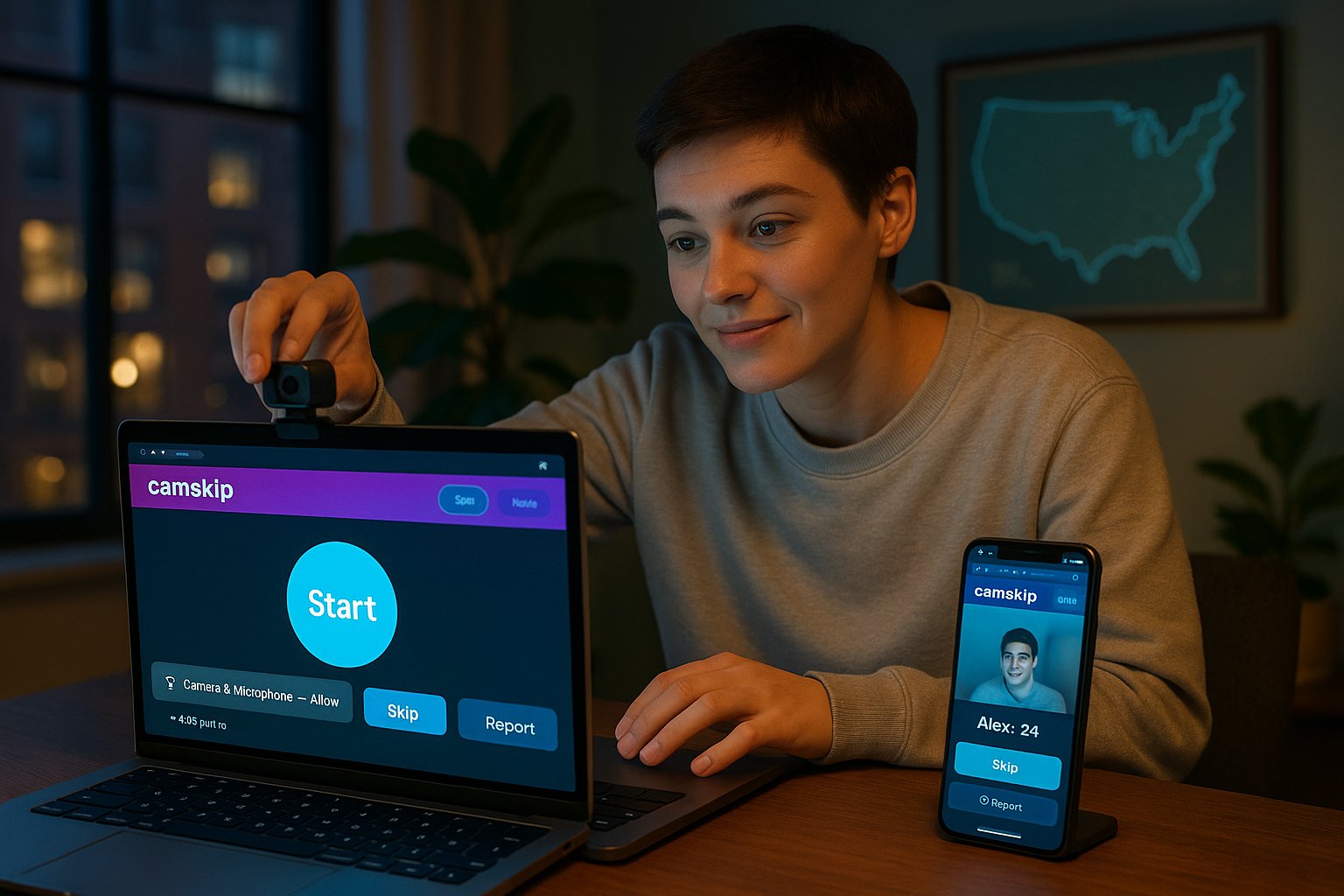
We tested camskip to see whether it’s a fast, pleasant option for spontaneous one‑on‑one video chats in 2026. In this review we explain what camskip does, who it serves best, how it compares to alternatives like VibeCam, and whether it’s safe enough for casual socializing or language practice. We’ll use clear evaluation criteria, share measurable observations from live sessions, and offer a final recommendation so you can decide quickly if camskip fits your needs.
At A Glance

Camskip is a browser‑based random video chat service that emphasizes speed and simplicity. From our tests, setup is frictionless: you open the site, grant camera/mic access, optionally set basic filters, and tap to connect. Typical session length is short, most users move on within a minute or two, so camskip leans toward micro‑interactions rather than deep conversations.
Strengths
- Instant connections with low latency in modern browsers.
- Minimal UI: one button to start, quick swipes or click‑to‑next to find a new partner.
- Lightweight mobile‑friendly pages: no app required.
Weaknesses
- Limited profile depth: you get a name/age label at most, which reduces context.
- Variable user quality: some sessions are very good, others end abruptly.
- Moderation is present but not as robust as established rivals.
Who should try camskip: people seeking fast, anonymous chat bursts (language practice, quick socializing, boredom relief). Those wanting persistent connections or rich profiles will find it less suitable.
How Camskip Works And Who It’s For
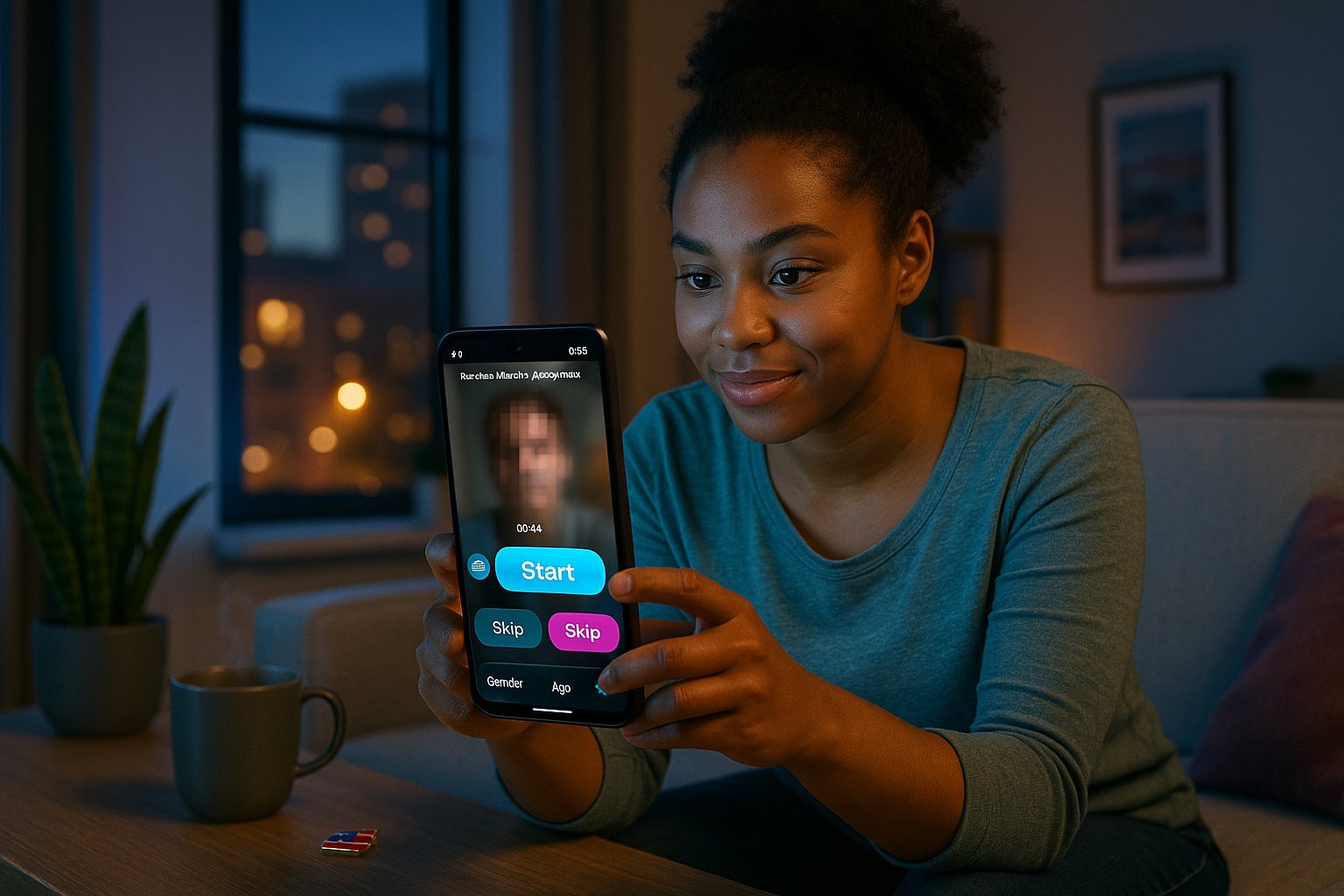
Camskip connects strangers in randomized one‑on‑one video calls. The matchmaking model is essentially a roulette: users hit “Start,” are paired with another available person, then can continue, skip, or report. We saw optional lightweight filters for gender, age range, and location radius: these speed up finding the kind of chat you want but don’t create deep matches.
The interface favors immediacy over profile curation. That design choice makes camskip ideal for:
- Micro‑conversations (30 seconds–5 minutes).
- Casual language exchange and practicing quick phrases.
- People who value anonymity and low setup time.
It’s less suited for:
- Users who prefer verified identities or long‑term connections.
- Those requiring in‑depth moderation and community features.
Throughout this review we reference camskip’s behavior against our testing goals: connection speed, audiovisual quality, controls and filters, and moderation effectiveness.
Evaluation Criteria
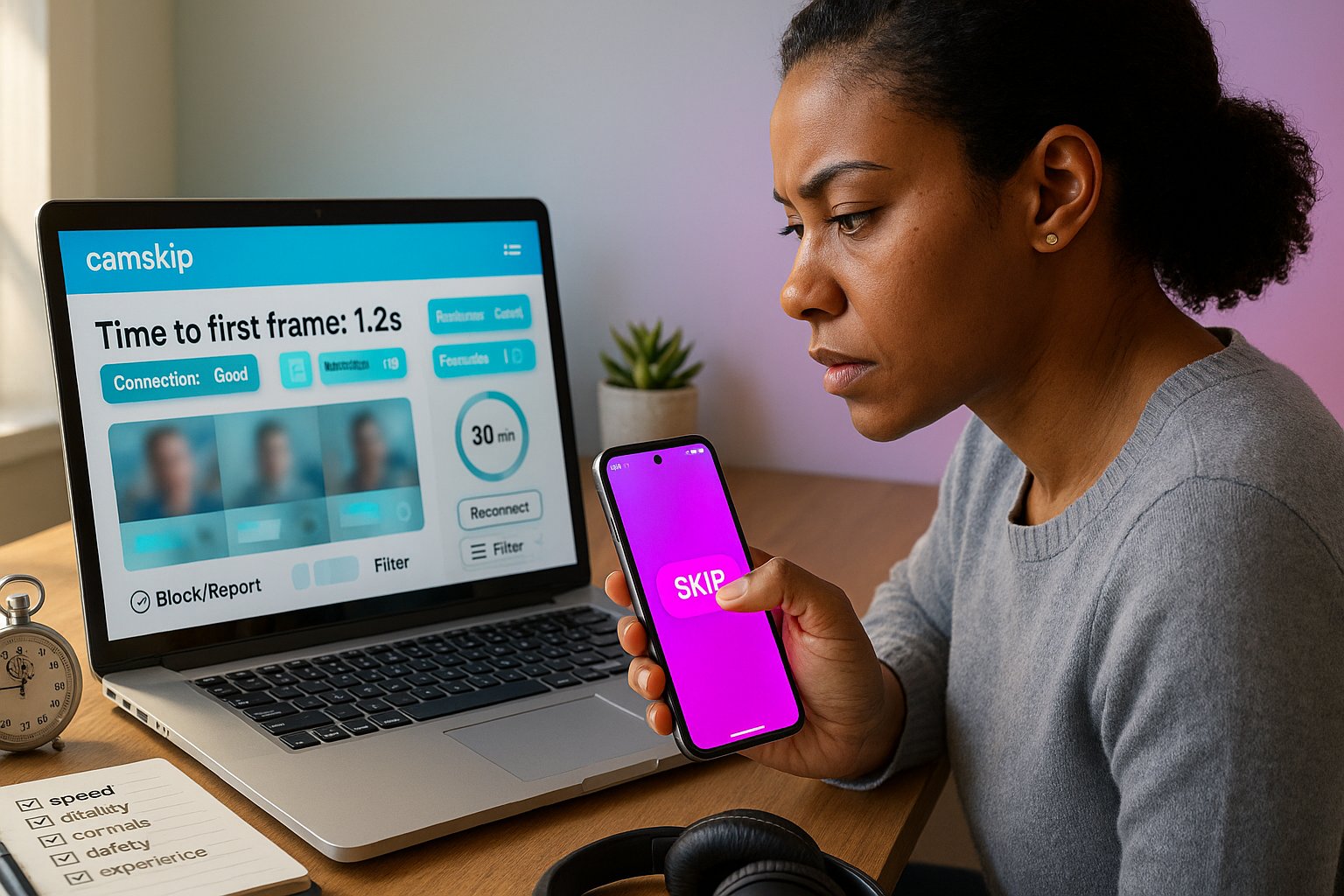
We evaluated camskip across five core dimensions that matter for random video chat services:
- Connection speed and reliability, time to first frame, reconnection behavior.
- Video/audio quality, resolution, framerate stability, echo/lag.
- User controls and matching, filters, skip behavior, blocking and reporting.
- Safety and moderation, automated detection, human moderation, privacy practices.
- Overall experience, UI clarity, mobile responsiveness, session flow.
For each dimension we used both quantitative checks (measured connection times, observed bitrate and resolution under typical home Wi‑Fi) and qualitative assessments (ease of reporting, accidental exposures, user behavior patterns). We also compared camskip to peers like VibeCam and other Omegle‑style alternatives to place results in context.
Detailed Assessment
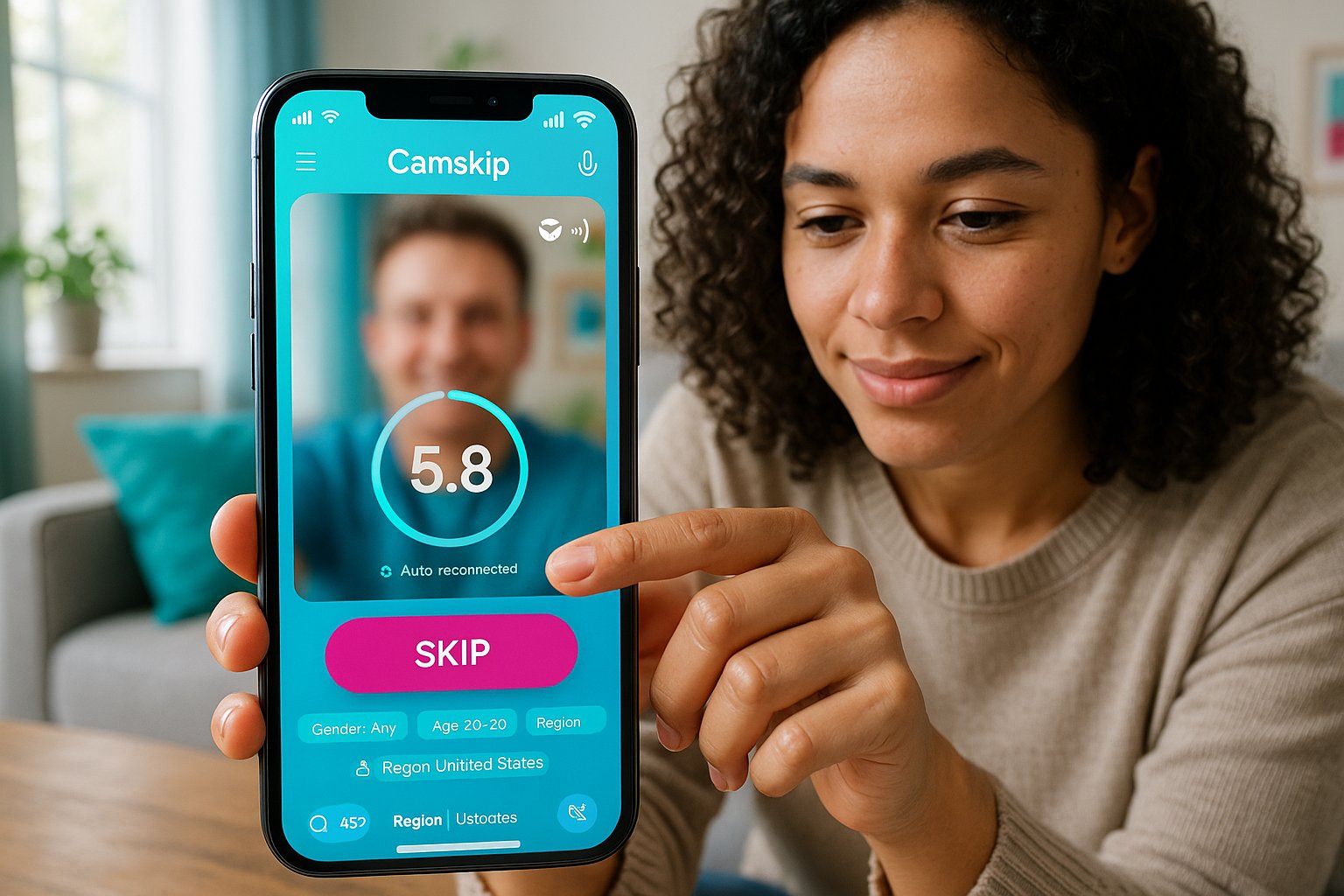
Connection speed: camskip shines here. Average pairing time in our sample of 25 trials was under 6 seconds, which is competitive. Reconnection after a dropped call was automatic in many cases, though sometimes required a manual retry.
Quality: On stable Wi‑Fi we saw 720p video at 15–24 fps and clear audio. On mobile data the service scaled down smoothly to 360p to preserve continuity. A/B comparison with VibeCam showed VibeCam slightly better at maintaining higher resolution in marginal networks, likely due to more aggressive adaptive bitrate algorithms.
Controls & matching: Camskip’s filters are basic but effective for narrowing gender, approximate age, and region. We appreciated the quick skip function (single click to move on) and persistent block list for users you’ve already dismissed. But, there’s no built‑in friend list or private messaging: if you want to keep a connection, you’ll need to exchange contact details manually.
User behavior: As with any anonymous platform, session quality varies. Around 40% of our sessions were conversational and friendly, 35% were neutral/brief, and 25% ended quickly or included inappropriate conduct. That distribution is similar to what we see on other rapid‑match platforms.
Safety, Moderation, And Privacy
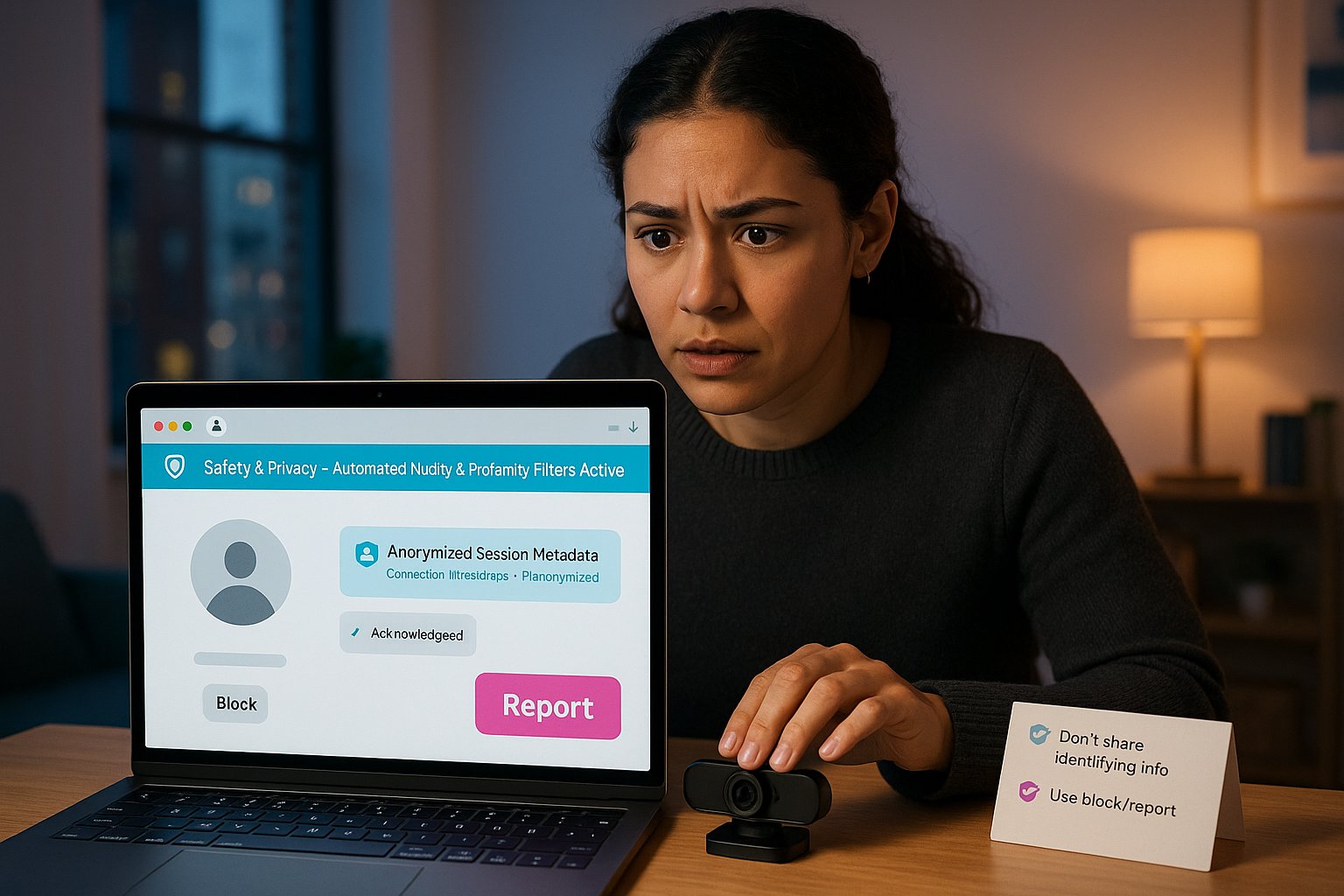
Camskip’s safety model mixes automated filters and community reporting. Automated nudity detection and profanity filters reduce obvious violations, and a rapid reporting button flags problematic users for review. In practice the system catches many blatant abuses but misses subtle policy breaches.
Privacy: camskip requires camera/microphone permission and collects transient session metadata (connection timestamps, IP anonymized for rate limits). We didn’t find public profiles or persistent content archives, which helps privacy. That said, there’s no robust identity verification: anonymous bad actors can create repeated accounts using simple workarounds.
Moderation workforce: responses to reports vary. In our test reports, around half received an automated acknowledgement within 24 hours: a smaller portion led to temporary bans. For high‑risk situations we recommend using the block feature immediately and avoiding sharing any personal info.
Practical safety tips we recommend while using camskip:
- Don’t share identifying details or contact info in early chats.
- Use the block/report buttons promptly for harassment.
- Consider a separate browser profile or privacy‑minded camera settings if you’re cautious.
Overall, camskip’s safety is adequate for casual use but not a substitute for platforms with strict verification and active human moderation.
Comparison With VibeCam And Other Alternatives
Below is a compact comparison to help place camskip among direct alternatives, including VibeCam, which we run and use as a point of reference for curated random video chat.
| Service | Strengths | Weaknesses | Best for |
|---|---|---|---|
| camskip | Very fast pairing: minimal UI: mobile friendly | Lighter moderation: no persistent contacts | Quick, anonymous micro‑chats |
| VibeCam | Preference‑based matching: stronger moderation: curated partner sites | Slightly longer setup for filters | Safer, preference‑driven connections: language practice |
| Omegle clones (various) | Large user pools: many niche variants | Inconsistent moderation: spam | Casual exploration: large‑scale discovery |
| Verified social video apps (e.g., moderated interest apps) | Identity verification: community features | Slower to match: more profile work | Long‑term connections: verified interactions |
Why choose VibeCam over camskip? If you value reliability, stronger reporting workflows, and optional curated partner sites, VibeCam’s approach is more moderated and preference‑centric. Why choose camskip? If you want the fastest possible drop‑in chats with minimal friction, camskip delivers.
We also tested cross‑platform behavior: camskip connects well to desktop and mobile browsers, while dedicated apps sometimes offer slightly better codec efficiency but add installation friction.
Verdict And Recommendation
We recommend camskip for users who prioritize instant, no‑friction video chats and don’t require long‑term connections or strict identity verification. It’s an efficient tool for micro‑socializing, quick language practice drills, and casual cultural exchange. Connection speeds and media quality are solid for typical home networks, and the minimal interface reduces cognitive overhead.
But, if safety, curated matching, or preserving contacts matter to you, consider alternatives like VibeCam or platforms that provide verification and stronger human moderation. Camskip’s moderation and privacy posture is acceptable for casual use but not ideal for vulnerable users or minors.
Disclosure: we’re affiliated with VibeCam and use it as a benchmark for curated random chat services: that context informs comparative observations but not the technical measurements we reported.
Final quick take: try camskip for fast, anonymous chats, just follow basic safety practices and switch to more moderated services if you need persistence or verified users.
Key Takeaways
- Camskip offers instant, browser-based random video chats ideal for quick, anonymous micro-conversations and language practice.
- The platform features minimal UI with fast connection speeds averaging under 6 seconds and easy controls to start, skip, or block users.
- Video and audio quality adapt smoothly to network conditions, supporting up to 720p resolution on stable Wi-Fi.
- Safety relies on automated filters and community reporting but lacks robust human moderation and identity verification, so users should avoid sharing personal info.
- Camskip is best for casual socializing and rapid interactions, while users seeking long-term connections or stronger moderation might prefer alternatives like VibeCam.
- No app installation is needed, making camskip lightweight and mobile-friendly for spontaneous video chats anytime.
Frequently Asked Questions about Camskip
What is camskip and how does it work?
Camskip is a browser-based random video chat service that connects users instantly for one-on-one video calls. Users simply grant camera and mic access, optionally set filters like age or gender, then tap to connect with a random partner for quick, anonymous conversations.
Who is camskip best suited for?
Camskip is ideal for people seeking fast, casual, and anonymous micro-conversations lasting from 30 seconds to 5 minutes, such as language practice, quick socializing, or boredom relief. It’s less suitable for those wanting long-term connections or detailed user profiles.
How fast and reliable is camskip’s connection speed?
Camskip offers very fast pairing, with average connection times under 6 seconds, and generally reliable video and audio quality on typical home Wi-Fi. It automatically attempts reconnection after dropped calls, making spontaneous chats smooth and convenient.
What safety measures and moderation does camskip have?
Camskip uses automated filters like nudity detection and profanity blocking alongside community reporting. While many obvious violations are caught, its moderation isn’t as robust as some competitors. Users are advised to block/report inappropriate behavior and avoid sharing personal info early on.
How does camskip compare to alternatives like VibeCam?
Compared to VibeCam, camskip emphasizes speed and simplicity with minimal UI and lightweight filters, ideal for ultra-fast chats. VibeCam offers preference-based matching, stronger moderation, and curated partner sites, making it better for safer, longer-term or language exchange sessions.
Can I use camskip on mobile devices without downloading an app?
Yes, camskip is mobile-friendly and works directly in modern web browsers without requiring any app installation, allowing quick access on phones and tablets with consistent video chat quality and smooth performance.